I really thought AI killed my passion for building, but it moved it
✍️ Written by me. AI was used as a reviewer and discussion partner.
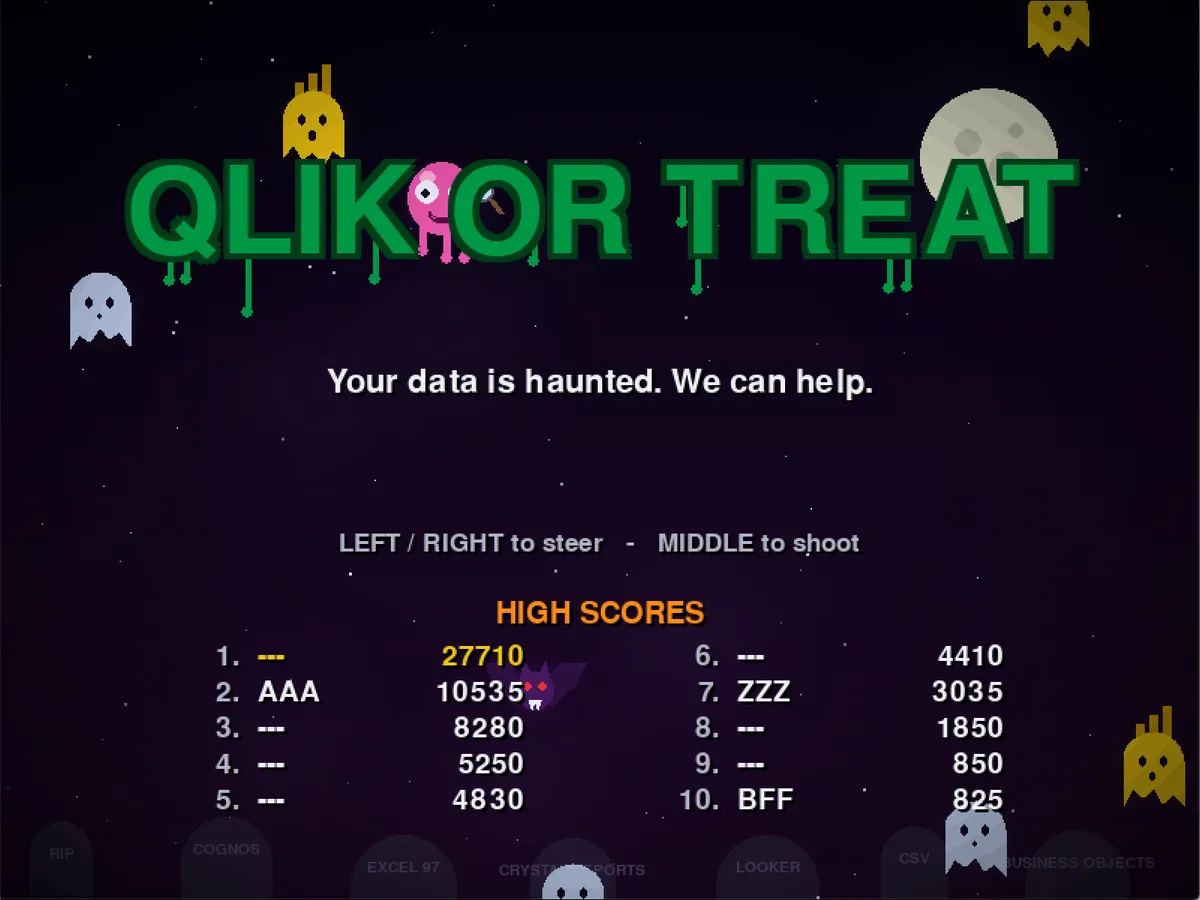
A play on our competitors’ names, Power-BOO-I and SickSense got me going. 1.5 hours of coding, 5 hours of hardware mangling, and 1.5 hours of hardening later, I had a fully functioning arcade game ready to stand the test of our sugar-fuelled kids. As an extra outcome, it also solved one of my more philosophical worries about the future.
It started as a morning thought: what about creating a spooky arcade game for our upcoming Halloween party? A fast-paced 90-second game (to let many play), easy to understand (three buttons at most), and fun for both kids and parents. I love such inspirational moments, and the challenge included all the ingredients I like: a clear goal, tons of problem solving, and fun technology.
Ever since AI has become more and more capable, I have had a fear that I would lose the passion for development. The flow, the endorphins you get from solving tricky tasks, the weird feeling of accomplishment with an efficient verification and deploy flow, and not to forget the beauty of some languages (not looking at you, JavaScript). I used to enjoy setting up projects with the proper tools (linters, test suites, performance checks, cloud deployments), and I liked zooming into tricky algorithms just to learn how they work. With AI, I felt that all of this is solved in a few prompts, and I am left with validation tasks such as testing the phone behaviour with or without wifi 🥱. I almost fell into the “why bother, it has already been done” trap. I thought I had to resort to the more esoteric areas to find my passion, like reverse engineering (also challenged by rea) or building all sorts of stuff you shouldn’t build in bash (YSAP).
BUT what I found was a newfound focus on the builder’s journey. New projects became doable, and they were actual products:
- a feature-complete podcast app
- a fully functional smart mirror
- a personal food planner
AND they came with a new set of problems to solve:
- cable jitter in my input cables
- different null byte definitions in Python and Arduino C
- Apple USB-C cables that don’t work on Raspberry Pi 🤬
I discovered my passion again, but in the journey. Adam Savage’s point in Every Tool’s A Hammer is to make things and let the making teach you. For someone who loves to build stuff, this was an extra win. Super, another checkbox ticked!
So what did I learn?
- I’m a “soft guy” with very limited hardware skills, and I suck at soldering. Several helpful YouTube videos later, I get by. Sometimes it makes sense to actually read up or do some investigation before throwing yourself into it with the thinking “how hard can it be?”
- The problem solving moved from software and algorithm challenges to infrastructure, hardware, and actual working products.
- Building with AI as a thinking partner works great. I like to form my ideas through writing, and asking the AI to be critical and to ask questions instead of assuming helps my thinking process.
Back to the arcade game, Qlik Or Treat: I spent 1.5 hours having fun with the software. The rest was spent on building the hardware. I tested the button configuration on an old shoebox.
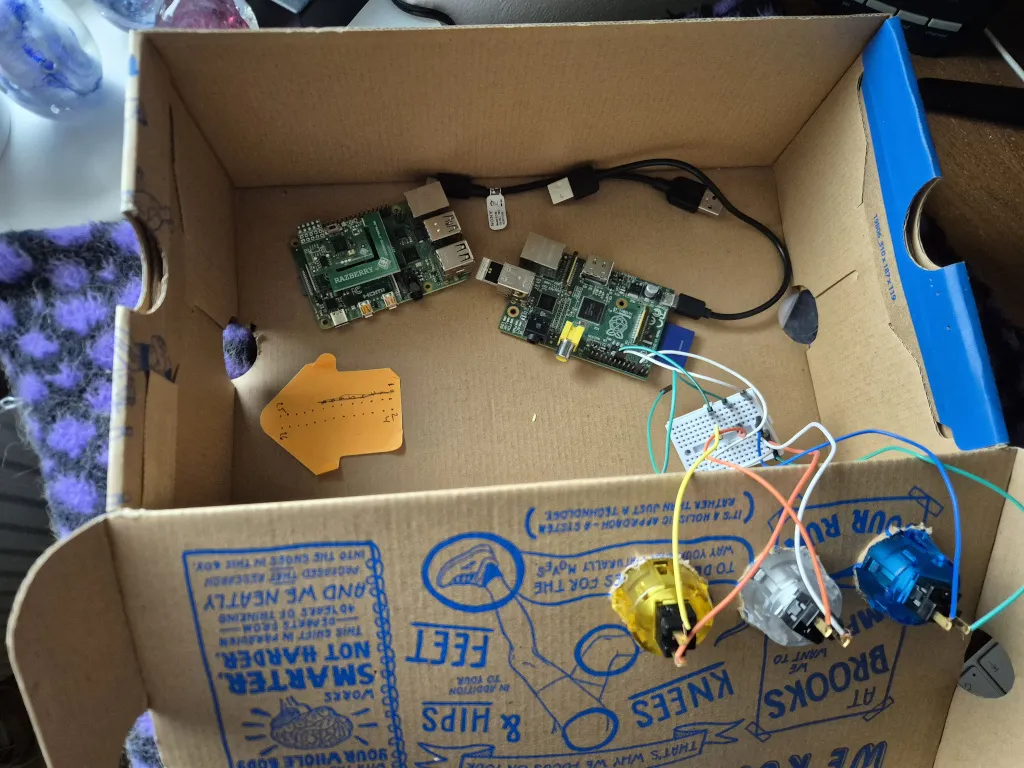
Then I connected the cables and soldered where required. I secured the setup so it could be powered on anywhere and just work without keyboard, network or screen. For the last 1.5 hours, I focused on making it work in the office with our large screen (different outputs, sound). Did I need AI for the 6.5 hours? Not really, but I’d never have got there without the spark from the first 1.5!
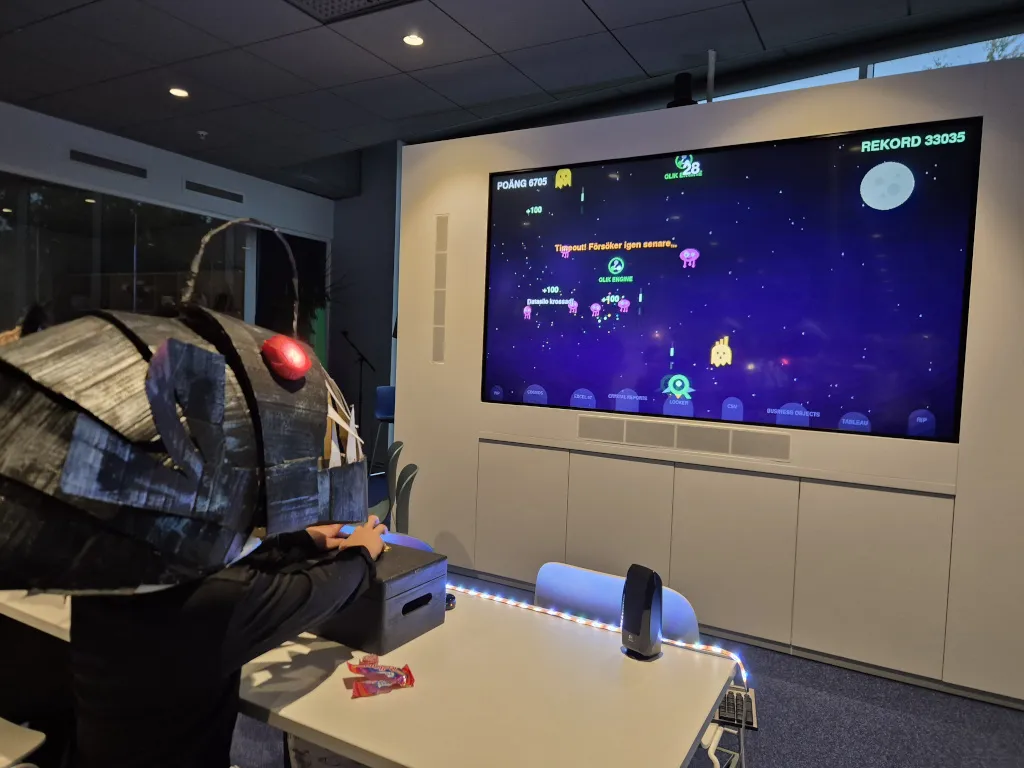
So, in conclusion: AI didn’t kill my passion as I feared. It just moved it to other parts of the builder’s journey. I still find energy in building, and there are new skills to gain.
Can this be translated to how we feel about development outside the pet projects? Honestly, I don’t know. Personally, I am thrilled about the breadth and the ability to choose where I want to go into depth. At work, I can see that the increased output is alluring, but I also see the stress it causes. The context switching, the review fatigue, the knowledge erosion: they are all real problems we need to tackle. What I learned, though, is that they are engineering problems like many before, and if there is something I know engineers are good at, it is solving them.
Have you been through the same journey? Which part of building did you love that AI now handles, and what filled the gap?